“The end of extreme poverty is at hand—within our generation—but only if we grasp the historic opportunity in front of us,” argues internationally renowned economist Jeffrey Sachs in his seminal work The End of Poverty. I join the optimism and idealism of Mr. Sachs to believe that people can—and should—be lifted out of extreme poverty. Unlike other causes that were born out of anger or fear, the fight against poverty is motivated by a different force: compassion. However, compassion that leads one to actively fight to end extreme poverty cannot be attained from a distance. For me, this type of compassion was born out of my proximate experiences with people living in extreme poverty and my faith.
In 2005, I was invited to join several other 20-something year olds on a missions trip to Beius, Romania. We all worked on Capitol Hill at the time, but this wasn’t my first time abroad. After college, I had spent a year in China teaching English 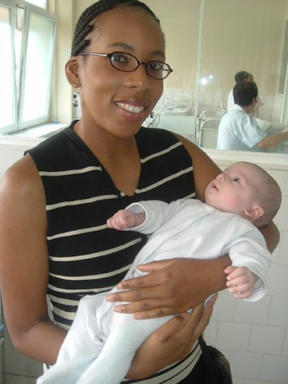 to Muslim college students. I had also visited other countries like Myanmar, Thailand and South Korea. Unlike any other place I had visited, Romania had the most profound impact on my journey to compassion for people living in extreme poverty. Remarkably, it was a premature baby that communicated this powerful message of compassion to me.
Under Romania’s former communist dictator, Ceausescu, many abandoned children lived in state-run hospitals. Although the country has implemented new policies and practices to tackle this crisis since Ceausescu’s fall in 1989, it was still very much a problem in 2005 when I visited one of their hospitals. Our team was on a carefully guided tour that day, which meant that we could only use a particular elevator to visit the floor where the children were housed (although, sadly, we knew that what we saw that day weren’t a reflection of the true conditions faced by the children who were housed on other floors).
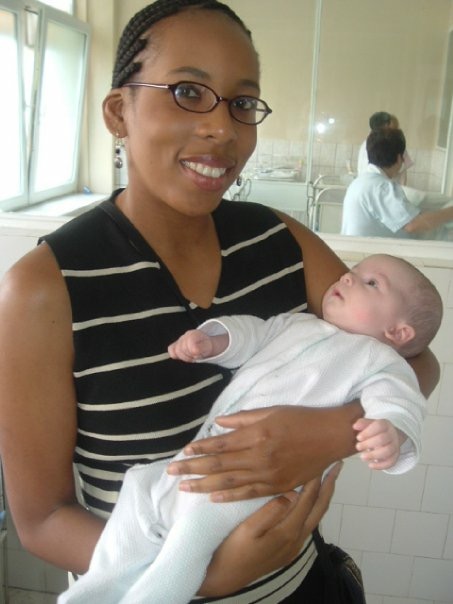
I didn’t expect compassion to possess me that day, but it did, and it happened as I held a premature baby, whose twin sibling was asleep in another bassinet. The babies were abandoned by their mother shortly after delivering them in that hospital. As a young, idealistic woman, I could not understand how a mother could possibly abandon her two babies in a state-run institution. What I learned that day is that it wasn’t uncommon for a poor woman to check herself out of the hospital and leave her newborn behind.
And in an instant, without a murmur or cry from this baby, the power of compassion possessed me as I held that baby and became proximate to the consequences of extreme poverty. I returned the U.S. and immediately began plans to start a nonprofit organization called The Daniel Society to help poor families live a better life. It would take 10 more years to develop the scope and mission of The Daniel Society, and this is where my faith comes in.
My Judeo-Christian faith has taught me that we are to be kind to the poor. But what does it mean to be kind to “the poor?” For me, it simply means that we have a responsibility to extend this awesome power of compassion to them in practical ways such as providing clothes, food and clean water to them. The Daniel Society will do this through our Refugee Basic Needs Initiative.
Next, we want to welcome the immigrant and make them feel at home in our country. The Daniel Society is designing a Central American Asylum Project to provide pro bono legal services to children fleeing gang violence in their home countries, and a Welcome Home Legal Aid Initiative to assist low-income, immigrant communities in New York City.
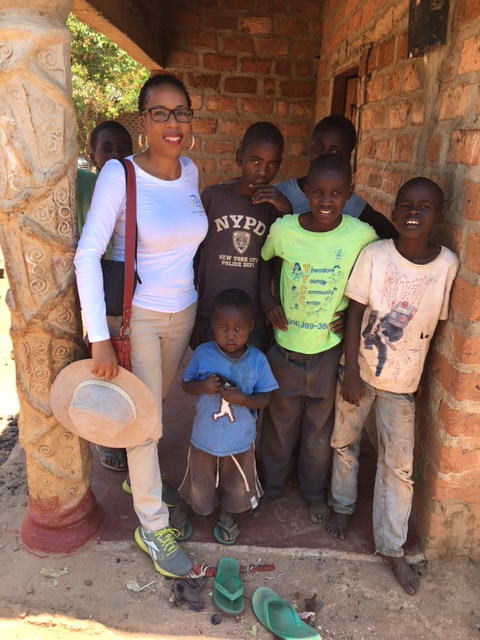
My faith has also taught me to take care of the sick. Through our Compassion-In-Action Initiative, The Daniel Society is developing an HIV/AIDS public health initiative for implementation in Zambia, Africa next summer. This initiative will target poor young women, children and incarcerated individuals living with HIV/AIDS.
And last, we want to remember those in prison, and as such, we are tailoring a prisoner reentry program through our Renewed Purpose Initiative. This initiative will teach young men how to reconcile with their family, community and law enforcement.
Eleven years ago when I held that premature abandoned baby, I never imagined that the power of compassion would overtake me and lead me to start The Daniel Society. It seems foolish to think that a baby holds such power. But this is the power of those who are facing extreme poverty. They hold the power to end extreme poverty by imparting compassion that compels others to advocate on their behalf. This is why I am optimistic, and why I believe extreme poverty could end.



 The Daniel Society